
From My Neapolitan Grandparents’ Farm to NYC’s Little Italy: The Story Behind My Food Tour
The family story behind my small-group Little Italy and Chinatown food tour in New York City
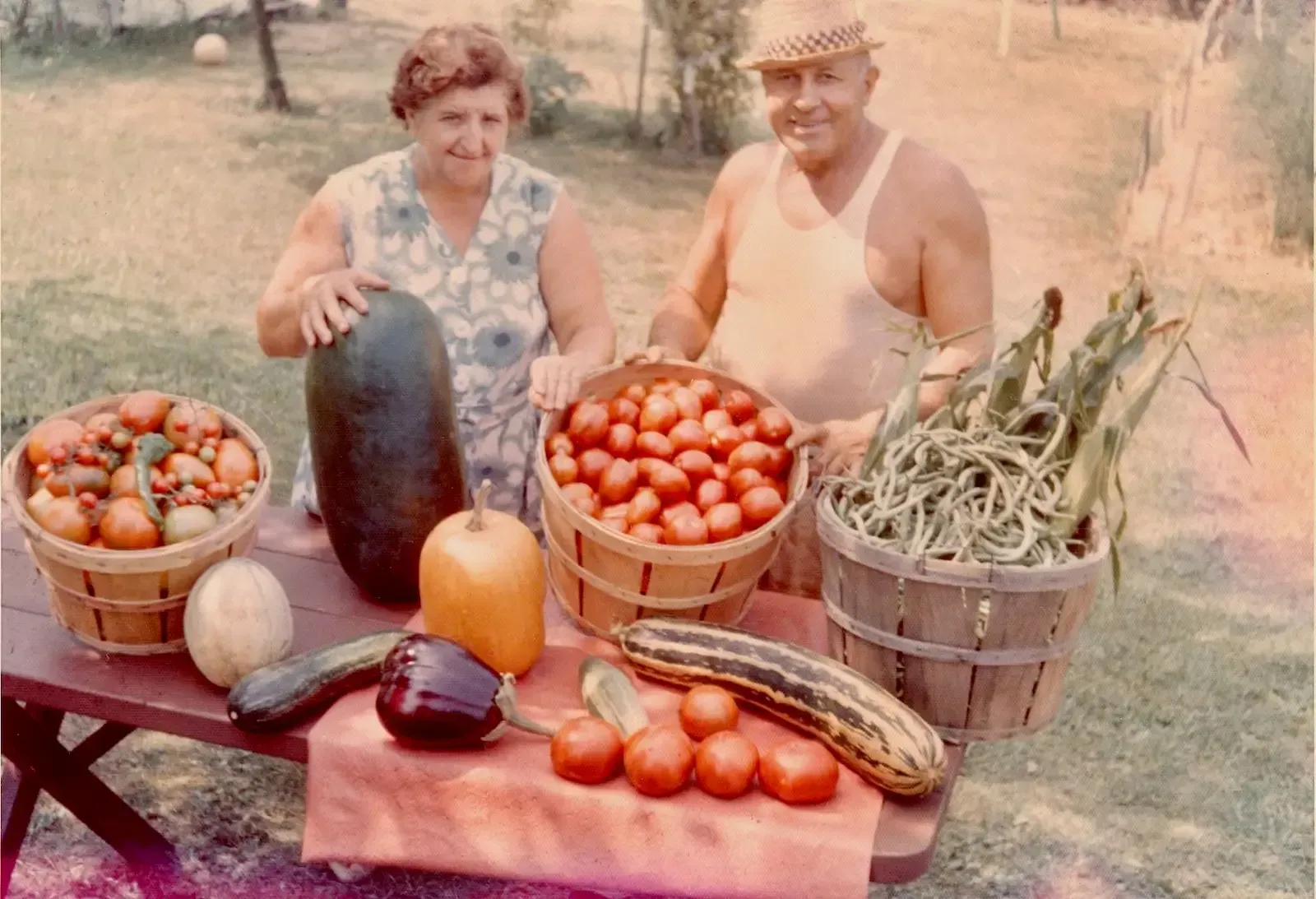
My grandparents from Naples with their harvest at their New Jersey farm, late 1960s / early 70s.
Welcome to my first blog post.
I wanted to share a little about my background—and how it led me to create my small-group food tour of Little Italy and Chinatown here in New York City.
I’m a native New Yorker, born in Queens. My parents were born here too, but my grandparents came from Naples and Sicily during the peak years of Italian immigration. A big part of my childhood was spent on my grandparents’ farm in New Jersey.
My grandfather, Pasquale—Patsy—was a carpenter in the city during the week, and on weekends he’d drive out in his 1955 Buick. My grandmother Anna stayed there through the summer, hosting what felt like a constantly rotating cast of family.
It was an incredible place to grow up. To us kids, the property felt endless. There was the farm, and beyond that, a wooded area near a brook that always seemed farther away than it actually was.
There were always old bicycles lying around in various states of disrepair. A short ride away was Farrington Lake—and even more importantly, the general store, which stocked bait, snacks, sodas, and for us, the real prize: balsa wood airplane gliders.
Cow Bells and Giambotta (jam-Boh-tah) and peaches
In the kitchen, my grandmother kept a pair of old copper cowbells and when it was time fir dinner she (or us kids if we got to it first) would ring the bells letting everyone know it was time for dinner. We had wonderful food all the time - fresh pasta and sauce, salads, and plenty of vegetables.
Close to my heart was a Neapolitan summer stew called giambotta, made from from eggplant, zucchini, bell peppers, potato, onion, tomatoes, garlic, basil, and tomatoes.
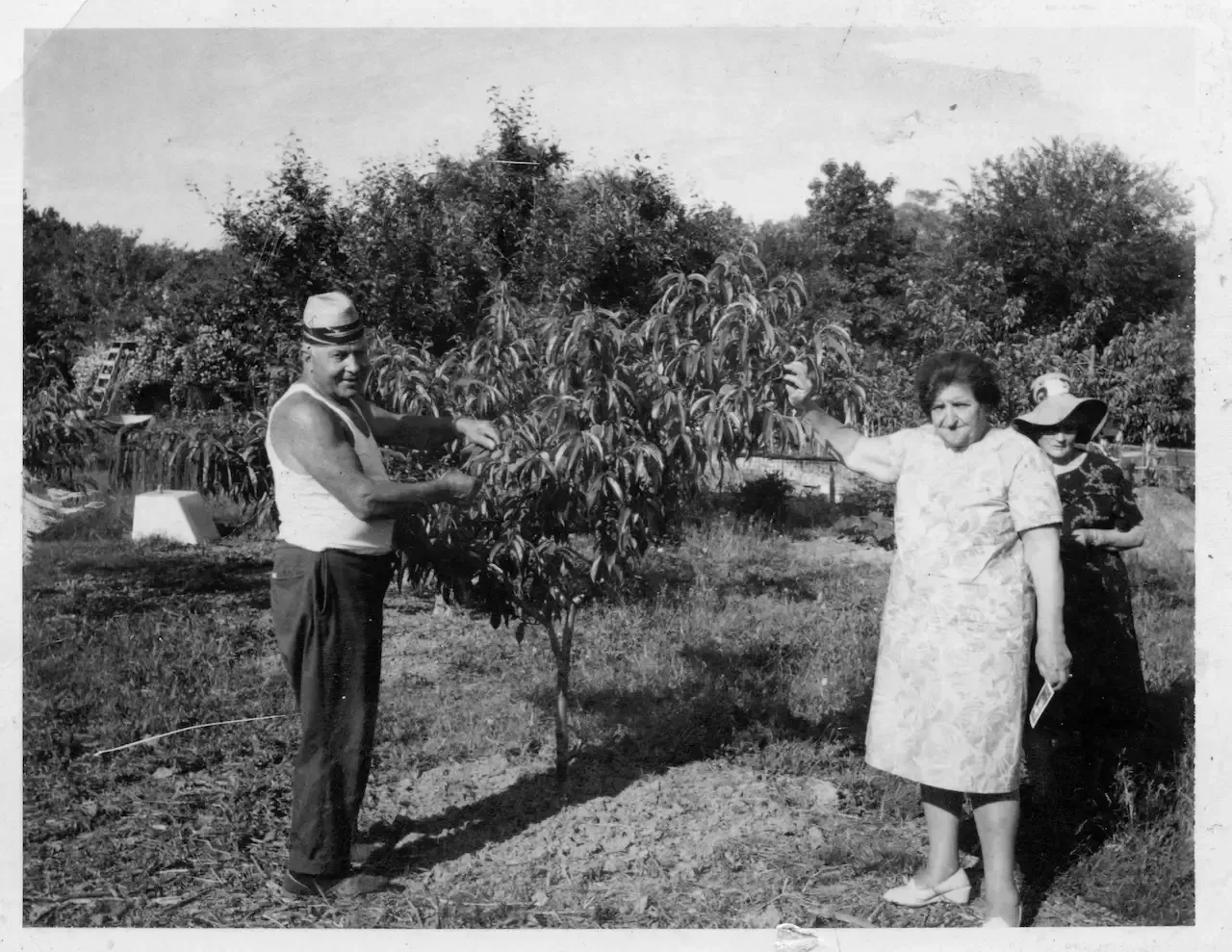
We had many fruit trees and to this day I associate sweet peaches with my time at The Country, which is what we called the farm.
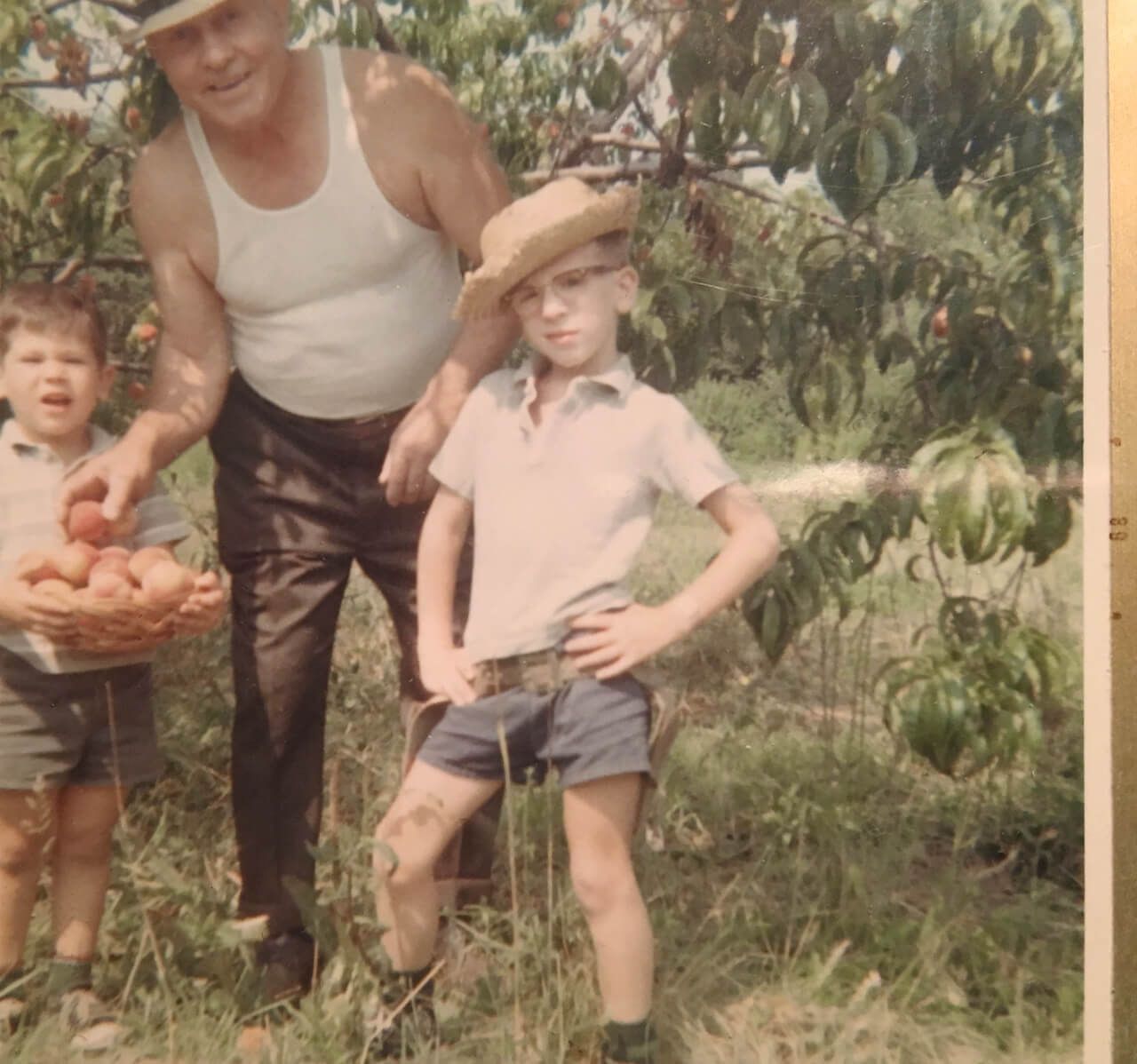
Me holding the peaches while my grandfather and brother gather the harvest.
From the Farm to Little Italy: Why Mom & Pop Shops Still Matter
All these years later, after spending a lot of time in Little Italy as a tour guide, I realized I wanted to bring what I experienced on that farm—and from my grandparents—into something I could share.
Little Italy today is much smaller than it once was. What used to stretch across dozens of blocks is now just a few streets. But even within that, there are still places that carry that same spirit.
Places like Ferrara Bakery (1892), Di Palo’s Fine Foods (1926), and E. Rossi & Sons (1910)—businesses that have been around for generations, and still take pride in what they do.
Those are the places I build my tour around.
Why Mom & Pop Shops?
When someone owns a small business, everything is on the line. Their name, their reputation, their livelihood.
They don’t cut corners. They use better ingredients, take more care, and hold themselves to a higher standard—because they have to.
That’s what I grew up around. And it’s what I try to show people when I walk them through Little Italy and Chinatown today.
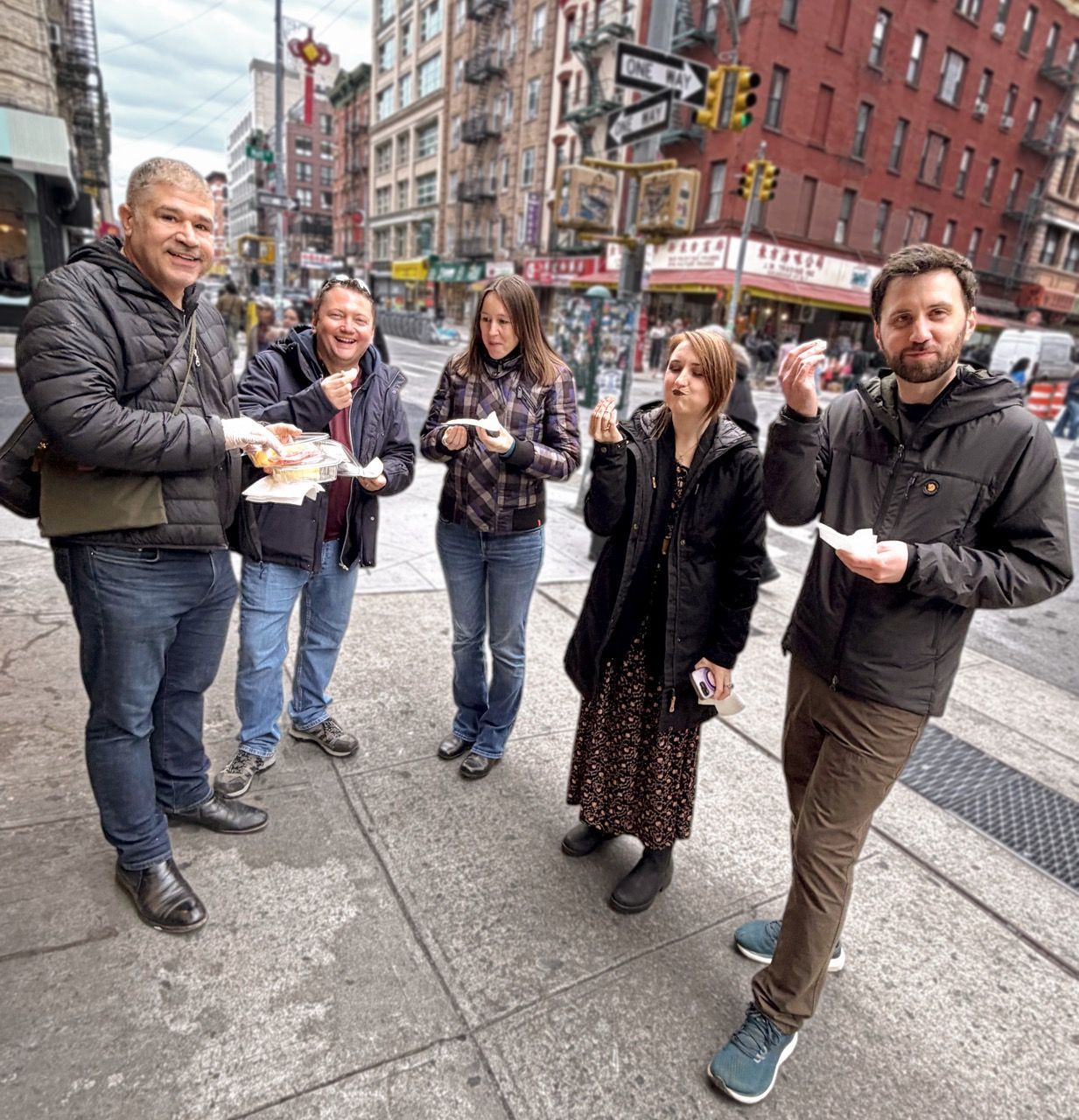
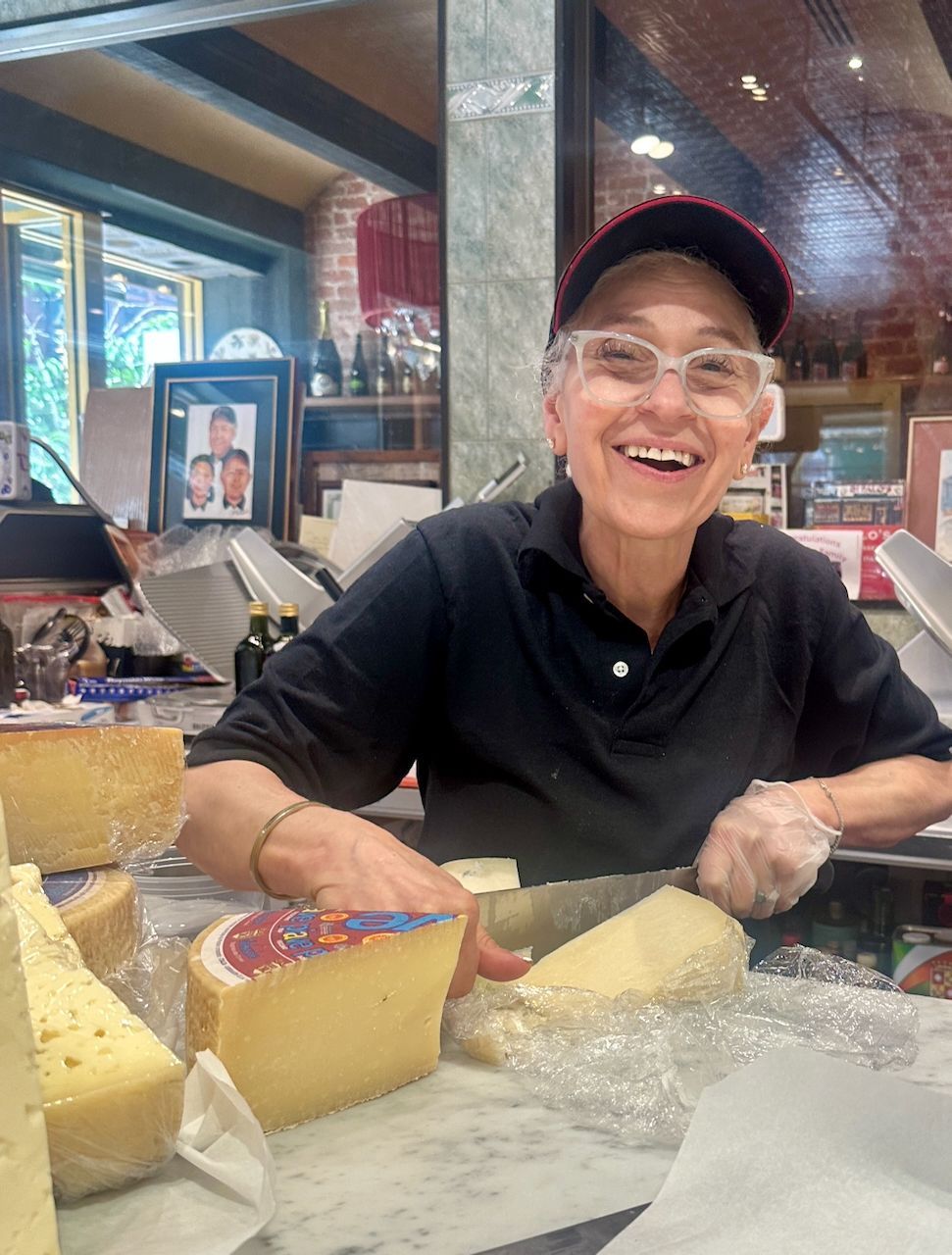
Recent guests on the Authentic Mom & Pop Food Tour of Little Italy and Chinatown (above) and the always cheerful Marie, the daughter of the founders at Di Palo Fine Foods, who are celebrating their 100th year in business, preparing some cheese for us (below).